Coral restoration is often discussed in broad environmental terms.
But what does it mean to measure impact in a way that is credible, comparable, and investable?
As part of the Venturebeam Venture Impact Score (VIS) Founder Series, we speak with founders building impact-driven companies across our portfolio.
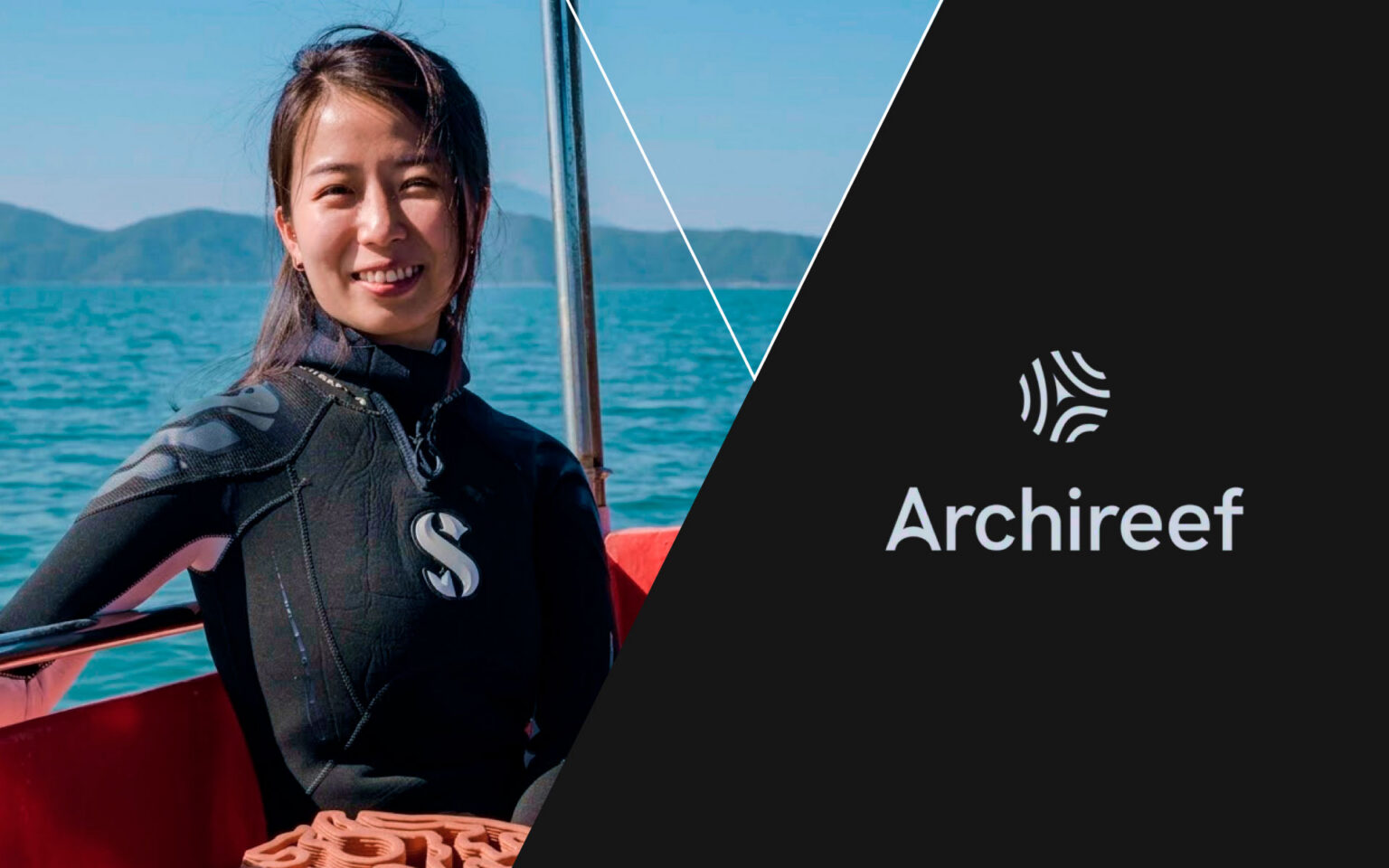
Today, we highlight Archireef, a marine climate tech company focused on making ocean restoration measurable and scalable. We spoke with Vriko Yu, Co-Founder & CEO, about what meaningful, measurable impact looks like in practice
Q: Coral restoration is often discussed in broad environmental terms. For Archireef, what does meaningful, measurable impact actually look like in practice?
For us, meaningful impact starts with what can be measured and defended over time. Our core KPIs include area assessed, restored and monitored; biodiversity uplift, and species richness and abundance, supported by documented monitoring methods. In practice, our process runs in four stages: identify a site and establish baseline conditions, deploy the intervention, monitor outcomes against that baseline, and report results in formats relevant to environmental compliance, asset management, and investor-grade disclosure. That sequence is what converts a restoration intervention into something that can be audited, compared across sites, and integrated into risk and reporting frameworks.
Q: Your coral survival rates significantly outperform natural averages. Beyond the data, what does that level of improvement enable at an ecosystem level?
While some conventional restoration struggles to keep corals alive past two years, our Reef Tiles demonstrated 90% coral survivorship over five years — long enough to support fish recruitment, invertebrate colonisation, and measurable biodiversity uplift. Our monitored deployments show 6x fish abundance versus control sites within six months, and 5x cryptic taxa abundance at twelve months. That’s not aesthetic recovery — it’s a functioning trophic structure, and it’s how we measure whether an intervention is actually working.
Q: Biodiversity restoration has traditionally been difficult to finance. How do you make marine regeneration understandable and investable for commercial partners and investors?
Marine regeneration becomes investable when it’s tied to obligations that already exist. Regulatory frameworks — IFC PS6, TNFD, EU CSRD — already impose biodiversity due diligence on project finance, infrastructure lending, and listed asset owners. The question for those clients isn’t whether to address marine biodiversity risk; it’s how to do so in a way that is technically defensible and reportable. Our model — eco-engineering combined with structured monitoring and reporting — is built to serve that compliance need directly. That’s not a sustainability gesture. That’s infrastructure for an obligation they already carry.
Q: As you scale projects across regions, what has been the biggest challenge in maintaining consistent, measurable impact outcomes?
The challenge isn’t replication — it’s comparability. A deployment in the Arabian Gulf operates under fundamentally different temperature, salinity, and ecological baselines than Hong Kong’s typhoon-exposed coastlines. What we standardise isn’t the intervention; it’s the methodology — how we establish baselines, select stock of foundational species appropriate to each site, and measure outcomes in ways that are defensible across contexts. That methodological consistency is what makes our results comparable across deployments and relevant to frameworks like TNFD, which require site-specific disclosure rather than portfolio-level averages. Scale only matters if the evidence holds at every site. That’s a design principle, not a disclaimer.
What stands out to us in Archireef’s approach is how clearly they think about impact, not just as an outcome, but as something that can be measured and trusted over time.
👉 More about how we evaluate impact through the Venture Impact Score (VIS) framework in our White Paper.