Some of the world’s highest-risk operations happen far from reliable connectivity, yet much of the technology designed to protect them still assumes a network.
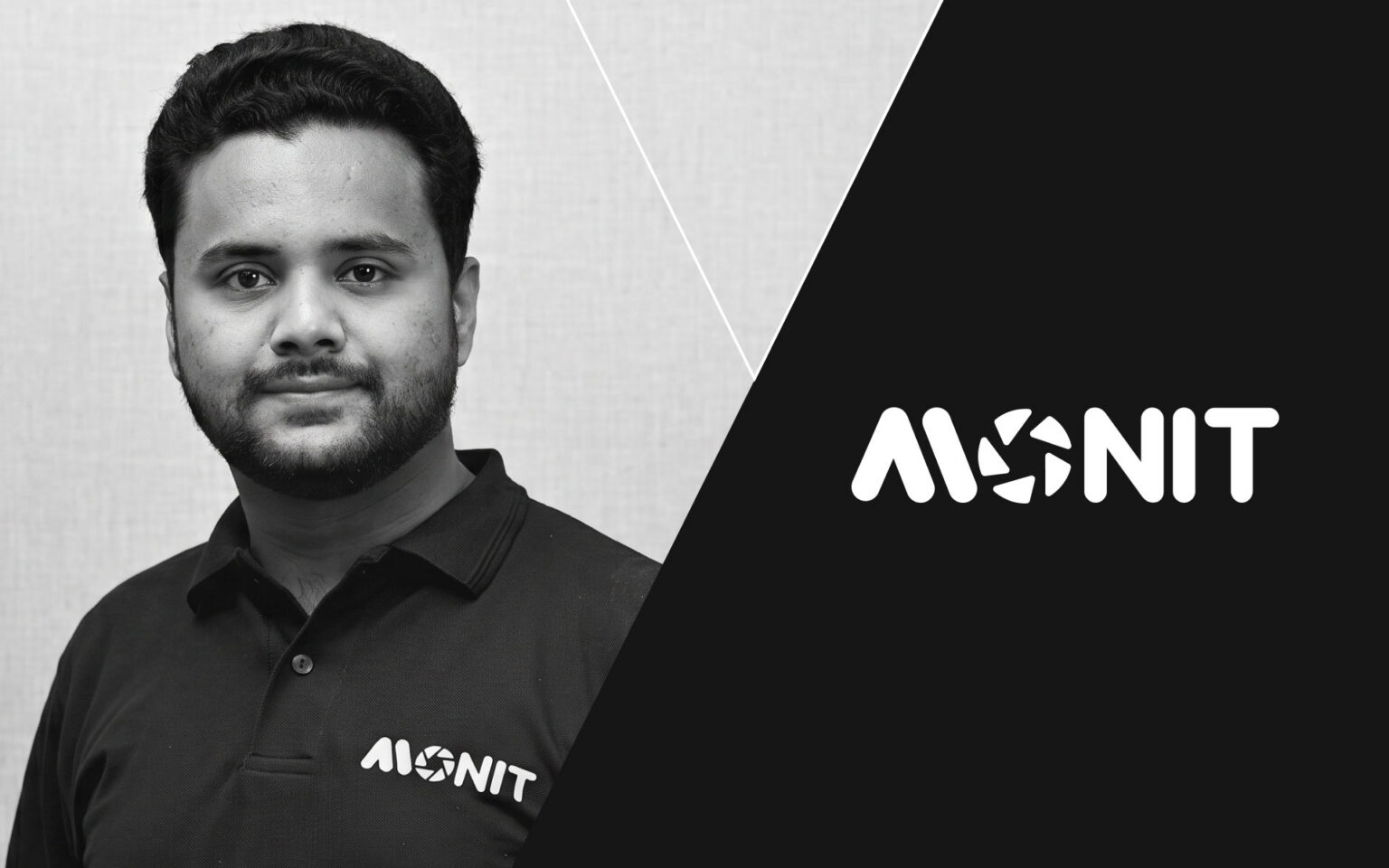
As part of our VIS Founder Series, we spoke with Mustafa Jaffery, Co-founder & CEO of Monit, about how edge AI helps operators identify risk earlier, prevent losses and act in real time.
- What was the catalyst for founding Monit, and what industry challenge did you believe was being overlooked at the time?
It goes back to June 2017, when a fuel tanker rolled over on the N5 near Ahmedpur Sharqia and, by the end of that morning, more than two hundred people were dead. It remains one of the worst road disasters anyone has ever recorded.
What has stayed with me is the timeline rather than the number. Investigators traced the whole thing back to a driver nodding off at the wheel, but that was only the first domino, and behind it sat the vehicle’s design, the driver’s workload, and the way the spill scene was managed. A whole system gave way at once. Every one of those failures had been sitting there in plain view for months, and nobody was looking, or perhaps more accurately, nobody had anything to look with.
That, I think, is what the industry had stopped noticing. Critical operations run blind, not for want of technology, but because the technology assumed a network. It is a perfectly fine assumption in a warehouse in Rotterdam, and a useless one on a desert highway at 5am, or at a wellsite, or halfway down a mine pit.
Fatigue is the clearest example. International estimates put it behind 30 to 40% of heavy truck accidents, and yet across the whole of the UAE the Ministry of Interior attributed just 113 crashes to fatigue or sleepiness over four years, in a country where a single emirate logs thousands of accidents a year. That is not a measure of how often drivers fall asleep, it is a measure of how rarely anyone can prove it. And the same blindness runs through the rest of the sector: eighty percent of workplace injuries worldwide happen in developing markets, while under 1% of all industrial sensor data ever makes it into an actual decision.
So the gap was never more data. If the one factor killing your drivers is the factor your reporting systematically misses, you cannot manage it after the fact. You have to see it as it happens, which means the intelligence has to live where the risk lives. That is the whole thesis behind Monit: perception, reasoning and action on a single device, at the edge, acting in milliseconds, with no network required.
- How do your customers define success after implementing Monit’s technology, and what measurable outcomes have you seen?
Our customers are refreshingly practical about how they judge us, and it comes down to three questions: did incidents go down, did product losses go down, and did the operation stay running.
On safety, one of the top international oil marketing companies saw more than 800 near miss incidents caught and acted on in twelve months, across their road network, their terminals and their retail sites.
Those are the events that would otherwise have turned into a catastrophic accident. On product loss, Our Edge AI Theft Detection solution cut fuel theft by 80% across the OMC fleets we monitor, which for a single operator works out to roughly $4.5M saved a year. On efficiency, customers have seen an 82% lift in worker productivity, and across our deployments we have helped avoid roughly $1.1B in infrastructure damage, simply because the alerts arrived early enough for someone to intervene.
Those outcomes come from one platform rather than four products. The same edge device and the same intelligence stack runs across oil and gas, mining, transport and manufacturing, and what it is looking for shifts with the site. On a wellsite it is watching for fire, a gas leak, or a pump about to fail before it takes the whole operation down. On a tanker it is cargo integrity and the 400 litres a trip that used to walk off during transit. On a plant floor it is compliance reporting and equipment interactions. In a pit it is vehicle proximity and live visibility across a site that changes shape every week.
What connects all of that is the condition rather than the use case. High consequence physical operations, difficult environments, poor connectivity, almost no real time visibility. Once you can see and reason about what is happening on site in the moment, the applications multiply on their own, which is why what changes between industries is the model and the rule set, not the hardware. None of that happens without the engineering underneath, of course. We run quantized SLMs and vision models entirely on the box, taking under 200 milliseconds from the moment a camera sees something to the moment an operator gets told, at better than 97% detection precision with false positives under 3%.
Each device handles twenty or more concurrent camera and sensor streams on 80 TOPS while sipping under 15 watts, and all of it works stone cold offline, syncing encrypted whenever a signal eventually shows up.
Of all those figures, the false positive rate is the one I would defend hardest. Safety systems rarely fail in dramatic fashion. They fail when they raise too many false alarms, the control room stops taking them seriously, and the alerts get switched off. Once operators stop trusting the system, none of the other results are achievable.
- Can you share a customer story or milestone that best illustrates the value and impact Monit is creating?
Our work with one of the top international oil marketing companies, no contest, partly because of what it achieved but mostly because of how neatly it closes a loop I have been carrying since 2017.
Fuel logistics is about as consequential as ground transport gets, since one bad night leaves you with wrecked infrastructure, environmental damage, regulators at the door, and people who don’t come home. Running underneath all of that, this operator was bleeding 300 to 400 litres of product to pilferage on more or less every trip. Two very different problems, and yet the same root cause sat beneath both of them, which was zero visibility on a moving asset precisely where coverage drops out.
We embedded edge AI across the fleet, the terminals and the retail sites. In twelve months, more than 800 near miss incidents were caught and acted on, and theft across the monitored fleets fell by 80%. The near miss number is the one I care about most, and I would rather be precise about what it means.
These are not accidents that happened. They are the moments before an accident, the fatigue event, the no go zone entry, the unsafe manoeuvre, caught while there was still time to do something. In safety terms that is the whole game, because near misses are the leading indicator that almost every industry collects badly or not at all. Eight hundred of them, surfaced in real time, in a single year, on fleets where previously nobody would have known.
Prevention is an odd thing to sell, mind you, because the proof of your product is an absence, and there is something faintly absurd about saying nothing happened, congratulations, here is the invoice. But the operators feel it, and that is why this is the milestone for me. The exact category of event that made me start this company is now being caught before it ever becomes an event.
- How do you see AI and connected vehicle technologies transforming fleet operations over the next five years, and where do you see Monit leading that change?
There are two forces at work here, and neither one moves an inch without the other.
Autonomy is the obvious one, as vehicles keep getting smarter and less reliant on the person behind the wheel. Saudi Arabia is already running autonomous pilots in Riyadh, with the Transport General Authority planning to push past 20 autonomous vehicles across key routes, working alongside the Ministry of Interior, SDAIA and SASO. What people tend to miss is that every step toward driverless actually raises the safety bar, because once you take the human out there is more to perceive, more to reason about and more to act on, all of it locally and all of it immediately.
The second force is less glamorous, and it is the one I would underline for anyone building in this space: regulation. High risk sectors do not get changed by enthusiastic early adopters, they get changed by mandates, and I am not theorising, because that is literally our own origin story. Monit scaled because Pakistan’s regulator required tank lorries carrying petroleum to meet safety standards and run tracker devices, and here is the uncomfortable part of it: those rules had been on the books since 2009 and only got enforced after Ahmedpur Sharqia. It took two hundred deaths to activate an eight year old regulation.
The same pattern is now playing out across the Gulf. In Oman, OPAL sets the road safety and HSE bar for oil and gas and approves who is allowed to supply vehicle monitoring systems, with compliance rules that are not remotely optional for producers, logistics contractors or field service firms. In Saudi Arabia, TGA rules requiring heavy trucks, buses and logistics vehicles to carry compliant tracking and video systems feeding live into the national WASL platform reached full mandatory enforcement this year.
Compliance is quickly becoming the floor rather than the differentiator. That raises the more interesting question of what happens once every fleet is fully instrumented. Operators are already overwhelmed by the data they have, which is exactly what that statistic about under 1% of sensor data informing decisions is telling us. Adding another dashboard does not fix it, because the data is still sitting on a screen that nobody has time to read.
This is where agentic AI changes the shape of fleet operations, and it is where we have put our chips. We have just launched an agent that pulls together thousands of data sources and hands the operator something useful, which is to say an answer rather than a chart. Pair that with agents running on the edge device itself and the fleet stops being something you watch, because it starts managing its own risk and only bothering you when it genuinely should.
Fleets are where this is most visible, though nowhere near where it stops. The same edge intelligence that watches a tanker on a highway watches a pit, a plant floor and a wellsite, catching a leak, a theft in progress, a pump about to fail, or the small daily inefficiencies that cost an operator more over a year than any single incident does. That matters commercially, because most operators here are not just running a fleet. They are running fleets and terminals and sites and plants, and they would rather not buy four systems from four vendors to see one business.
We are early to that, and if I am honest, it is the part I am most excited about, because the next five years are not really about bolting more cameras onto more trucks. They are about whether the intelligence sits at the edge, close enough to intervene, or in a data centre somewhere, very eloquently explaining what already went wrong.
The strongest proof of Monit’s technology is often what never happens: the accident prevented, the theft stopped, or the failure caught in time. It reflects the principle at the heart of what Monit is building: identify risk early enough to change the outcome.
As Monit enters its next stage of growth, we are pleased to support Mustafa and the team on their fundraising journey as they continue to scale the business and its impact.